
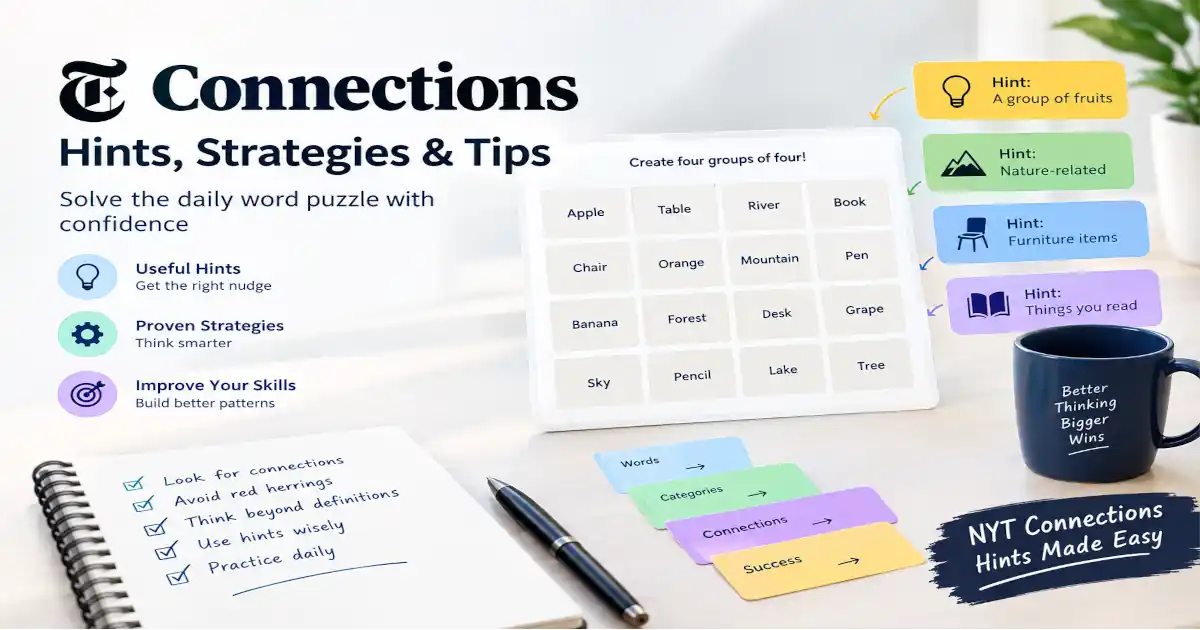
The New York Times Connections puzzle challenges players every single day. It groups sixteen words into four hidden categories. Many players get stuck fast. That’s why searches for nytimes connections hints mashable spike daily. Puzzle fans want quick, reliable help without full spoilers. This guide explains how Connections works. It also shows where to find trustworthy hints. You’ll learn strategies to solve puzzles faster. And you’ll understand why hint culture around this game keeps growing.
Puzzle games have exploded in popularity over recent years. Wordle started this modern wave of daily challenges. The New York Times noticed this trend quickly. It expanded its puzzle offerings to match demand. Connections became one of its most popular additions. This article breaks everything down step by step. It covers rules, strategy, and common pitfalls. It also explores the growing ecosystem of hint providers. By the end, you’ll feel ready to tackle any grid.
What Is NYT Connections?
Connections launched as a spinoff of Wordle. The New York Times added it to expand its puzzle lineup. Players see a grid of sixteen words. Four words secretly belong to each category. The goal is simple. Sort all sixteen words into four correct groups. Sounds easy, right? It rarely is. The game deliberately includes tricky overlaps. Some words fit multiple categories at first glance. That design forces players to think twice. One wrong guess costs a mistake point. Four mistakes end your winning streak.
Categories follow a color-coded difficulty system. Yellow is the easiest group. Green ranks slightly harder. Blue increases the challenge further. Purple is almost always the trickiest. Purple often includes wordplay or hidden meanings. The puzzle resets every day at midnight. This creates a shared daily experience worldwide. Players across different time zones tackle the same grid. That shared timing fuels lively online discussion each morning.
Unlike crosswords, Connections rewards lateral thinking over vocabulary size. You don’t need an expansive word bank. You need sharp pattern recognition instead. This makes the game accessible to a wider audience. New players often underestimate the puzzle at first. The grid looks simple on the surface. Experienced players know better than to rush. Careful observation always beats quick guessing.
Why Players Search for Hints
Daily puzzles create daily pressure. Players want to keep their streaks alive. A single wrong guess can break weeks of progress. That pressure drives people toward outside help. Searching nytimes connections hints mashable has become a common habit. Fans don’t always want the full answer. They just want a nudge in the right direction. A good hint preserves the fun. It removes only the frustration. Puzzle communities also thrive on shared struggle. People compare their results with friends. They discuss tricky categories online. Hints help players join these conversations. Nobody wants to feel completely lost.
How Mashable Covers Connections
Mashable publishes daily coverage of the Connections puzzle. Their articles break down each day’s categories. They offer hints before revealing full answers. This layered approach respects different reader preferences. Some readers want a gentle push. Others want the complete solution immediately. Mashable structures its posts to serve both groups. That’s a major reason nytimes connections hints mashable searches stay popular. The format simply works for busy readers. Their coverage typically includes a general theme hint first. Then it lists individual category clues. Finally, it reveals the full answer grid. Readers can stop reading whenever they feel ready.
How to Use Hints Without Spoiling the Fun
Hints work best with a little discipline. Jumping straight to answers kills the challenge. Try solving on your own first. Give yourself several honest attempts. Read the sixteen words carefully. Look for obvious pairs or themes. Group words that clearly belong together. Set aside anything confusing for later.
If you’re stuck, search for a light hint. Many searches for nytimes connections hints mashable aim for exactly this. A single clue often unlocks fresh thinking. It reignites your original strategy instead of replacing it. Save full answers as a last resort. Use them only when frustration outweighs enjoyment. Preserving the challenge keeps the game rewarding long term.
Strategies for Solving Connections Faster
Strong strategy reduces reliance on outside help. Start by scanning for extremely obvious groups. Simple categories often appear early. Locking those in builds early confidence. Watch for words with multiple meanings. Purple categories often exploit double meanings. A word like “bat” could mean an animal. It could also mean sports equipment. Stay alert to these traps.
Avoid guessing too early. Wait until you feel fairly confident. Random guesses waste your limited mistake allowance. Patience pays off more than speed does. Group by elimination when stuck. Identify your most confident category first. Submit that guess before anything else. This clears mental clutter from the grid. Talk through your reasoning out loud. Explaining your logic reveals hidden flaws. It also highlights connections you missed. This trick works surprisingly well for tricky puzzles.
Try categorizing words by part of speech. Nouns, verbs, and adjectives sometimes reveal hidden clusters. This method works well for tricky purple groups. It also helps separate red herrings from real matches. Consider each word’s most common usage first. Then consider its rarer, secondary meanings. Puzzle writers often hide answers in secondary definitions. This habit alone can unlock stubborn categories. Take short breaks if you feel stuck. Stepping away resets your perspective quickly. Many players solve puzzles faster after a brief pause. Fresh eyes catch connections tired eyes miss.
The Role of Community Discussion
Online communities amplify the Connections experience. Reddit threads dissect each day’s puzzle. Twitter and social platforms share screenshots constantly. These conversations create a feedback loop for hints. Sites offering nytimes connections hints mashable style content feed this loop directly. Readers get help, then join discussions afterward. This cycle keeps engagement high day after day. Community discussion also teaches pattern recognition. Regular readers start noticing recurring puzzle themes. They learn how puzzle writers think. Over time, they need fewer hints overall.
Common Mistakes Players Make
Many players guess impulsively. They see two similar words and submit instantly. This often triggers avoidable mistakes. Slowing down prevents most errors. Others ignore word context entirely. They focus only on surface meaning. Puzzle writers count on this oversight. Reading each word twice helps avoid traps. Some players ignore difficulty color patterns. They assume purple categories are always literal. That assumption frequently backfires. Wordplay dominates the hardest category most days.
Skipping hints entirely can also backfire. Refusing all outside help sometimes causes frustration. Frustration can lead to abandoning the puzzle altogether. Balanced hint use keeps motivation steady. Another common mistake involves rushing the yellow category. Players assume easy categories can’t hide traps. Puzzle writers sometimes exploit this overconfidence. Double-checking even simple groups prevents silly errors. Some players also forget to reconsider leftover words. After three correct guesses, four words remain. Players often submit these without careful thought. Since only one group remains, this step needs no guessing at all.
Why Daily Puzzle Games Keep Growing
Daily puzzle games satisfy a unique psychological need. They offer quick, structured challenges. Completion delivers a small sense of achievement. That feeling encourages daily return visits. Connections adds a social layer to this appeal. Friends compare results and swap strategies. Streak tracking adds gentle competitive pressure. These elements combine into strong daily habits. Hint culture supports this growth directly. Searches like nytimes connections hints mashable show real demand. Players want accessible support systems. Publishers who provide layered hints meet that demand well.
Tips for Building a Longer Streak
Consistency matters more than perfection. Play at the same time daily. This builds a reliable habit over time. Habits protect your streak better than occasional bursts. Keep a mental note of recurring themes. Puzzle writers often revisit similar tricks. Recognizing patterns speeds up future solves. It also reduces your need for hints. Don’t panic after a single mistake. One wrong guess doesn’t end your session. Reassess the remaining words calmly. Fresh eyes often spot the correct grouping. Use hints strategically, not habitually. Save them for your toughest sticking points. This preserves both your streak and your skills.
Final Thoughts
NYT Connections rewards sharp thinking and patience. It challenges players with clever word overlaps. Mistakes happen, but strategy limits them significantly. Practice steadily improves your solving speed. Hints remain a valuable tool for many players. Searching nytimes connections hints mashable connects readers with helpful, structured guidance. Used wisely, hints enhance the experience instead of ruining it. Balance remains the key takeaway here. Challenge yourself first before seeking outside help. Use hints sparingly, and only when truly stuck. This approach keeps the puzzle fun for the long run. Whether you’re a casual player or a streak-obsessed regular, Connections offers something valuable daily. It sharpens vocabulary and lateral thinking skills. It also builds a small, satisfying ritual into your day. Keep playing, keep learning, and enjoy every puzzle.
READ ALSO: Mary Barra and David Cordani: Two Leadership Stories Worth Studying
[…] READ ALSO: NYT Connections Hints: Your Daily Puzzle Survival Guide […]