
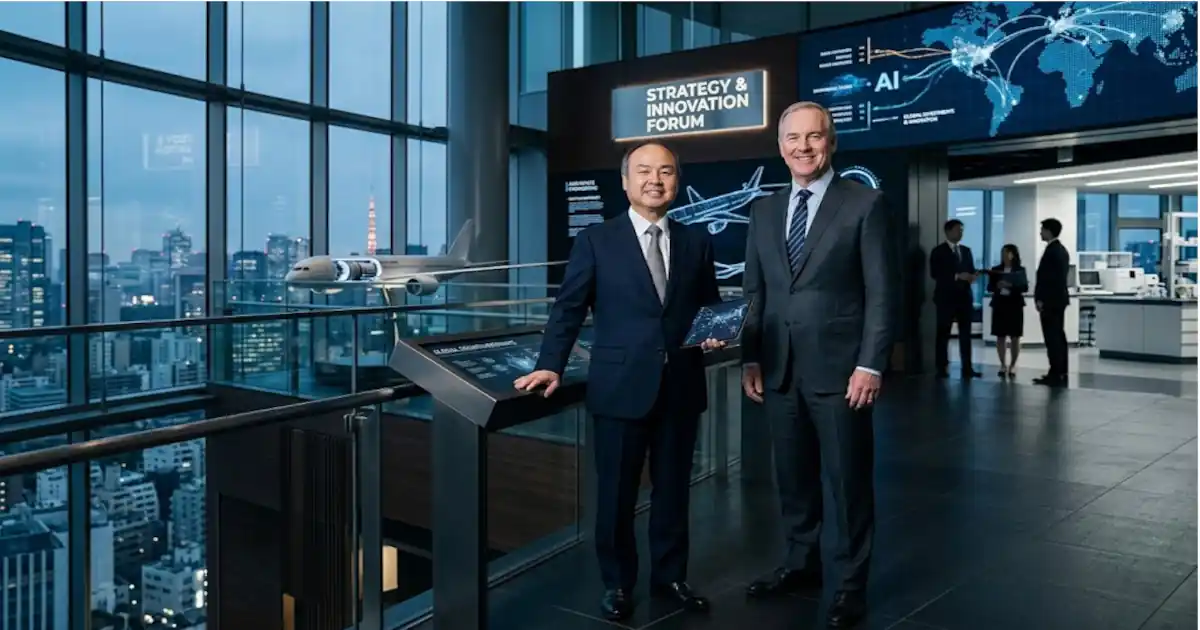
Few executives shape global business like these two. This article compares masayoshi son and greg hayes across career paths, strategy, risk, and leadership style. One leads from the technology investing world. The other led from the aerospace and defense world. Their approaches differ sharply, yet both offer lessons for modern leaders. This article does not claim a formal partnership between them. It examines how each man built influence in a different industry.
Who Is Masayoshi Son?
Masayoshi Son founded SoftBank in 1981. He was born in 1957 in Tosu, Japan, and studied at the University of California, Berkeley. He started with a software distribution business and expanded aggressively over four decades.
Early Bets That Built a Fortune
Son built his reputation on large, early investments. He backed Yahoo in the 1990s and gained enormous returns. In 2000, he invested about $20 million in Alibaba. That stake later grew into many billions of dollars. These wins made him one of the most famous technology investors alive.
The Vision Fund Era
Son launched the SoftBank Vision Fund in 2017. Saudi Arabia’s Public Investment Fund and Mubadala of Abu Dhabi supplied major capital. The fund targeted artificial intelligence, robotics, and mobile technology. Son also bought the chip designer Arm in 2016 for roughly $32 billion. Arm went public in 2023 and became a central piece of SoftBank’s AI strategy.
Setbacks Along the Way
Not every bet worked. WeWork collapsed in value and cost SoftBank billions. Many Vision Fund holdings lost money during the market downturn that followed. Son admitted mistakes publicly and kept investing. That resilience defines his reputation as much as his successes do.
Who Is Greg Hayes?
He joined United Technologies in 1997 and rose through finance roles. Greg Hayes built a very different career inside one large industrial company. He became chief financial officer in 2008. He became chief executive in 2014 and later chaired the board.
A Finance Leader Becomes CEO
Hayes earned trust through numbers and operational discipline. He managed budgets, acquisitions, and investor expectations. Colleagues often describe him as direct and practical. He spoke plainly about costs, margins, and cash flow. That style reassured investors during complex corporate changes.
Reshaping a Corporate Giant
Hayes led one of the biggest industrial transformations of the decade. United Technologies separated Otis and Carrier into independent companies. The remaining business merged with Raytheon in 2020. The combined company became Raytheon Technologies, now called RTX. It spans engines, avionics, missiles, and defense systems.
Handling Operational Crises
Hayes also faced serious operational challenges. Pratt & Whitney found a powder metal defect in some geared turbofan engines in 2023. The issue forced inspections and grounded aircraft. Hayes addressed the problem publicly and committed billions to fix it. Chris Calio succeeded him as CEO in 2025, and Hayes moved to a chairman role.
Comparing Their Industries
Technology investing and aerospace manufacturing run on different clocks. Son works in a world of fast bets and rapid change. Hayes worked in a world of long product cycles and strict safety rules. A jet engine takes years to design and decades to service. A startup can rise or fall within months.
Speed Versus Certification
Aerospace products require regulatory approval before they fly. Regulators examine every material, process, and test result. This slows innovation but protects lives. Technology investors face fewer such barriers. They can fund an idea quickly and pivot just as fast.
Capital Needs and Returns
Son deploys capital into companies he hopes will grow explosively. He accepts that many investments will fail. Hayes allocated capital into factories, research, and acquisitions with predictable returns. Aerospace margins stay steadier but grow more slowly. Each model rewards a different temperament.
Leadership Styles in Contrast
The contrast between masayoshi son and greg hayes shows up most clearly in how they lead. Son operates as a visionary storyteller. He speaks about centuries-long horizons and the coming age of superintelligent AI. Hayes operated as a disciplined manager. He focused on execution, quarterly results, and customer commitments.
The Visionary Approach
Son sets enormous goals and inspires others to chase them. He announced massive AI infrastructure ambitions, including the Stargate project with OpenAI and Oracle. Such moves signal confidence and attract partners. They also invite scrutiny when results lag behind promises. Visionary leaders must balance inspiration with proof.
The Operator Approach
Hayes built credibility through steady delivery. He set clear targets and reported progress honestly. Employees understood priorities because he communicated them simply. This style reduces surprises and builds institutional trust. It may also limit appetite for radical experiments.
How Each Leader Handles Risk
Risk tolerance separates these two executives more than anything else. Son treats risk as the price of opportunity. He concentrates large sums on a few big ideas. Hayes treated risk as something to measure, manage, and reduce.
Concentrated Bets
Son’s portfolio swings widely in value. A single winner can erase many losses. This approach demands strong nerves and patient backers. It also exposes investors to painful drawdowns. SoftBank’s stock has often moved sharply on his announcements.
Managed Exposure
Hayes diversified RTX across commercial aviation, defense, and aftermarket services. This mix cushions the company when one segment weakens. Defense demand can offset airline slumps. Service contracts provide recurring revenue for decades. Such balance supports stable dividends and long-term planning.
Communication and Public Image
Both men communicate confidently, but they use different tools. Son delivers long, dramatic presentations filled with bold forecasts. Journalists and investors quote his predictions constantly. Hayes spoke in earnings calls and congressional hearings. He answered questions with specific figures and straightforward language.
Building Trust With Stakeholders
Trust matters in both fields. Son must convince founders and sovereign funds to follow his vision. Hayes had to reassure governments, airlines, and shareholders. Each audience wants a different kind of proof. Son offers ambition. Hayes offered reliability.
Lessons for Business Leaders
Leaders can learn from both examples. The study of masayoshi son and greg hayes reveals complementary strengths. Neither style fits every company or moment. Smart executives borrow from each.
Lessons From Son
- Think far beyond the current quarter.
- Back transformative technologies early.
- Admit mistakes openly and move forward.
- Build partnerships that bring large pools of capital.
Lessons From Hayes
- Master the financial fundamentals before chasing growth.
- Restructure when a portfolio no longer fits.
- Face operational problems quickly and publicly.
- Communicate priorities in plain language.
Where Their Worlds Overlap
Although their industries differ, they increasingly intersect. Artificial intelligence now influences aerospace design, maintenance, and defense systems. Advanced chips, including designs from Arm, power many of these tools. Aerospace firms buy computing technology that investors like Son fund. Technology and industrial leaders will likely work more closely in the coming decade.
Shared Pressures
Both leaders answer to demanding stakeholders. Investors expect growth, and governments expect compliance. Supply chains remain fragile for chips and aircraft parts alike. Geopolitical tension affects both semiconductors and defense budgets. Leaders in every sector must now navigate these forces together.
What the Future Holds
Son continues to pursue an AI-centered strategy. He wants SoftBank to sit at the center of global computing infrastructure. Success depends on funding, partnerships, and execution. Hayes now guides RTX from the chairman’s seat. The company faces engine reliability work, defense demand, and supply chain recovery. Each man still shapes a major slice of the global economy.
Conclusion: What We Learn From Two Different Paths
The comparison of masayoshi son and greg hayes shows that success takes many forms. Son proves that bold vision can reshape industries. Hayes proves that disciplined execution can hold giant organizations together. Readers can apply both ideas in their own careers. Dream big, but measure results carefully. Take risks, but protect the core business. Leaders who combine these habits will handle uncertainty best.
Entrepreneurs, managers, and investors can study these two careers for practical guidance. Start with a clear vision. Build a strong financial foundation. Communicate honestly in good times and bad. These principles work across technology, aerospace, and every industry between them.
READ ALSO: How to Update ETSJavaApp by eTrueSports: A Complete Guide
[…] READ ALSO: Masayoshi Son and Greg Hayes: Two Leadership Styles Compared […]