
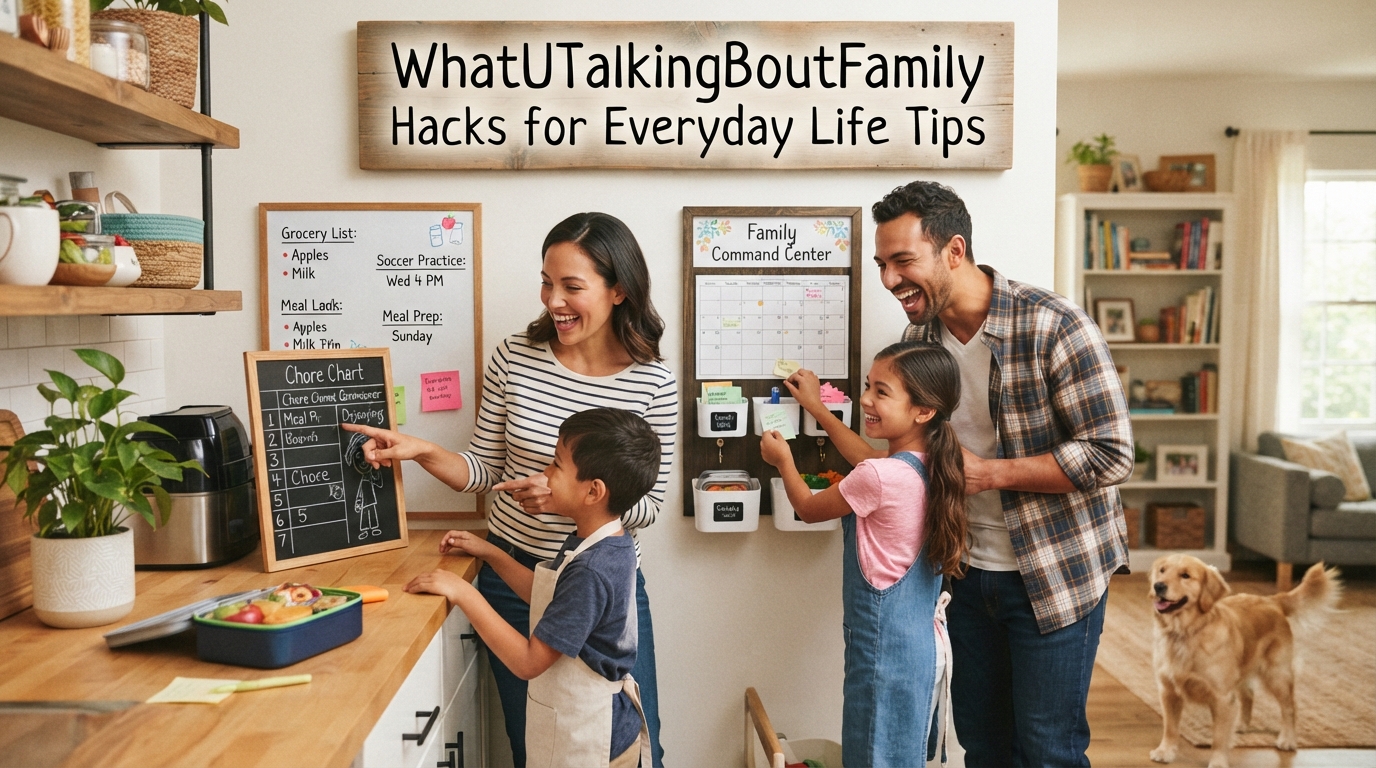
Every family knows the feeling of a day that starts with a missing shoe and ends with a sink full of dishes. Between school runs, work deadlines, meals, and endless laundry, it’s easy to feel like there aren’t enough hours. The good news is that you don’t need a total lifestyle overhaul to make things easier. Small, practical shortcuts add up, and that’s the idea behind whatutalkingboutfamily hacks: simple, real-world tips that save time, money, and sanity.
This article covers the everyday areas where a little strategy goes a long way: mornings, meals, cleaning, budgeting, and family connection.
Start With a Smoother Morning
Mornings set the tone for the whole day, and chaos before 8 a.m. tends to follow you around. The fix usually happens the night before.
Prep the night before. Lay out clothes, pack school bags, and put keys, wallets, and shoes in one spot by the door. Ten minutes of prep in the evening can save thirty minutes of frantic searching.
Create a launch pad. Set up a small station near your entrance with hooks for bags, a tray for keys, and a basket for shoes. Everything has a home, so nothing goes missing.
Use a visual checklist. For younger kids, a simple picture chart (brush teeth, get dressed, eat breakfast, pack bag) builds independence and cuts down on nagging. Kids love ticking things off, and parents love not repeating themselves five times.
Wake up 15 minutes earlier than the kids. Even a quiet cup of tea before the household wakes up can change your mood for the whole day.
Meal Planning Without the Stress
The daily question of “what’s for dinner?” wears families down. A bit of structure makes it far easier.
Theme nights. Assign a loose theme to each weekday, such as Meatless Monday, Taco Tuesday, Pasta Wednesday, and Leftover Thursday. You still get variety, but the decision is half made.
Batch cook on the weekend. Cook a big pot of rice, roast a tray of vegetables, or grill extra chicken. These building blocks turn into wraps, salads, curries, and stir-fries during the week.
Freeze in portions. Soups, sauces, and marinated meats freeze beautifully. Label bags with the date and contents so nothing becomes a mystery in the back of the freezer.
Let the kids help. Children who help plan or cook are far more likely to eat what’s on the plate. Give them small jobs like washing vegetables, stirring, or choosing one meal each week.
Keep a “fail-safe” meal. Have a go-to dinner that takes fifteen minutes and uses pantry staples, such as eggs and toast or simple noodles. It’s a lifesaver on exhausting days.
Cleaning Hacks That Save Hours
A tidy home doesn’t require hours of scrubbing. It requires habits and a few clever tricks.
The 10-minute reset. Set a timer and have everyone tidy the main living area before bed. It’s amazing how much a whole family can accomplish in ten minutes.
Clean as you go. Wipe the counter while the kettle boils. Load the dishwasher while dinner simmers. Small actions prevent big piles.
Use what you already have. White vinegar and baking soda handle many household jobs, from freshening drains to removing limescale from taps. A microfiber cloth and warm water clean glass and steel without streaks. Always test a small spot first, and never mix cleaning products.
One basket per room. Keep a basket in each main room for items that belong elsewhere. Once a day, someone returns everything to its proper place. No more constant trips up and down the stairs.
Assign age-appropriate chores. Toddlers can put toys in bins, while older kids can sort laundry, set the table, or take out the trash. Shared responsibility teaches life skills and lightens your load.
Smart Money Habits for Families
Family budgets can feel tight, but a few habits make a real difference. This is where whatutalkingboutfamily hacks are most valuable, because they focus on choices that fit real households rather than perfect spreadsheets.
Track spending for one month. You can’t fix what you can’t see. Note where your money goes, and you’ll likely spot easy savings, like unused subscriptions or frequent takeaway orders.
Use the 24-hour rule. For non-essential purchases, wait a day before buying. Often the urge passes, and your wallet thanks you.
Buy in bulk, but smartly. Stock up on non-perishables you use constantly, such as rice, lentils, toiletries, and cleaning supplies. Skip bulk buying for items that spoil or that you’ll never finish.
Swap and share. Kids outgrow clothes and toys fast. Trade with friends, join local swap groups, or buy secondhand. It’s better for the budget and the planet.
Set family savings goals. Whether it’s a holiday, a new bicycle, or an emergency fund, a visible goal keeps everyone motivated. Let the kids watch a jar or chart fill up, and they’ll learn that saving pays off.
Time-Saving Tech and Organization
Shared family calendar. Use a digital or wall calendar that everyone can see. Color-code each family member, and add school events, appointments, and birthdays. It prevents double-booking and last-minute surprises.
Set recurring reminders. Bills, medications, library returns, and school forms are easy to forget. Let your phone remember them for you.
Declutter regularly. Once a season, go through wardrobes, toy boxes, and pantry shelves. Donate what you no longer use. Less clutter means less to clean, store, and lose.
Batch errands. Group shopping, post office trips, and pickups into one outing rather than several. You’ll save fuel, time, and energy.
Make Time for Connection
Hacks aren’t only about efficiency. The whole point of saving time is having more of it for the people you love.
Device-free dinners. Even three or four nights a week, put phones away and talk. Ask questions like “What was the best part of your day?” to spark real conversation.
Weekly family time. Pick one evening or afternoon for a game night, movie, walk, or backyard picnic. It doesn’t need to be fancy. Consistency matters more than cost.
Talk about feelings. A simple check-in at bedtime gives children a safe space to share worries and wins. It builds trust that lasts into the teenage years.
Celebrate small wins. A good report card, a tidy room, a new skill learned: acknowledge them all. Positive attention motivates kids and reminds the whole family that effort is noticed.
Final Thoughts
Family life will never be perfectly organized, and that’s okay. The goal isn’t perfection; it’s making daily routines lighter so you can enjoy the moments that matter. Start small by picking two or three tips from this list and trying them for a week. Keep what works, drop what doesn’t, and adjust to fit your household.
That flexibility is the real strength of whatutalkingboutfamily hacks: they’re practical, adaptable, and built around everyday realities. With a little planning, a few clever habits, and a shared sense of teamwork, even the busiest family can enjoy calmer mornings, easier meals, tidier homes, and stronger bonds.
Which hack will you try first? Pick one, share it with your family, and watch small changes turn into lasting habits.
READ ALSO: https://universalsearch.it.com