
Introduction
Developers sometimes meet cryptic error codes that no manual explains. The python error oxzep7 software message is one of them. It appears in terminals, log files, and crash reports. Many users search for it and find little guidance. This guide explains the likely causes behind the message. It also walks you through proven diagnostic steps and practical fixes. You will learn how to isolate the fault, repair your environment, and prevent a repeat. Follow each section in order, and you will save hours of frustration.
What Is the Python Error OxZep7 Software Message?
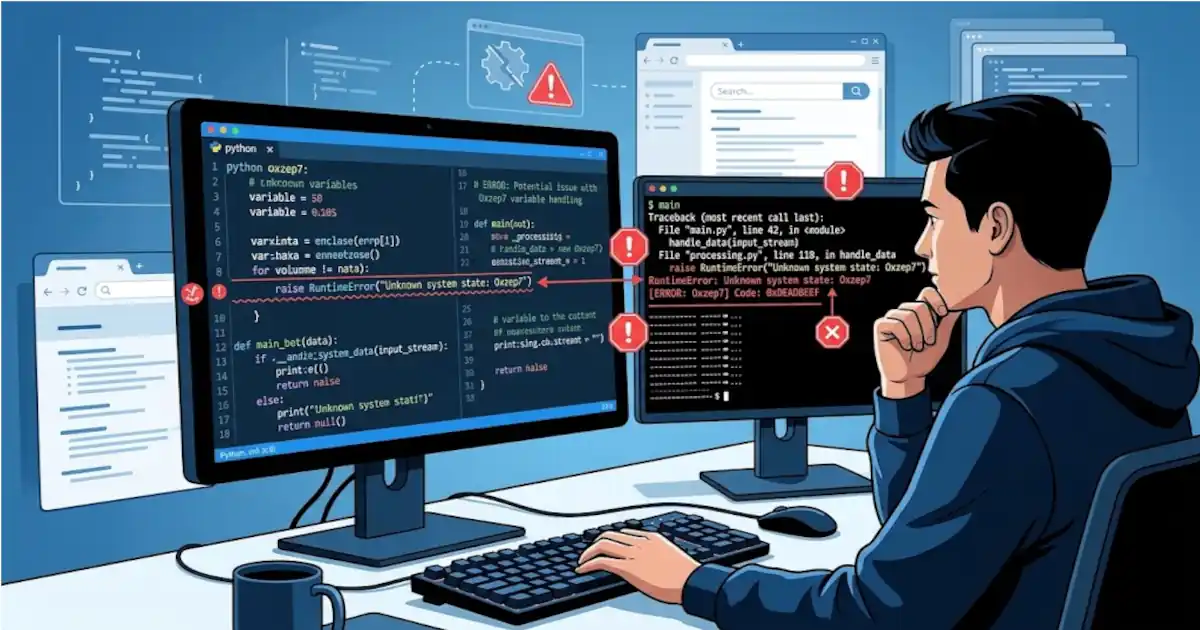
The python error oxzep7 software message does not appear in the official Python documentation. Python’s built-in exceptions use clear names, such as ImportError, ModuleNotFoundError, and RuntimeError. The string “oxzep7” looks like a custom identifier. A third-party package, a bundled application, or an internal tool most likely generates it. Treat it as a symptom, not a diagnosis. The real problem sits in the code, the environment, or the installation behind it.
Understanding the Error Code
Custom error codes usually act as labels inside a larger program. The developer attaches a code to a specific failure point. When that point fails, the program prints the code and stops. The code itself carries little meaning outside that program. The traceback around it carries the real clues. Always read the lines above and below the code.
Why Official Documentation Falls Short
Vendors often skip documentation for internal error codes. Small projects rarely maintain a full error catalog. Forks and repackaged builds also rename or alter messages. As a result, search engines return few exact matches. You must rely on structured troubleshooting instead of a lookup table. That approach works for almost every Python failure.
Common Causes of the Error
Most Python failures trace back to a short list of root causes. Each cause below can trigger the python error oxzep7 software message in a different way. Check them from the most likely to the least likely.
Corrupted or Incomplete Installation
Interrupted downloads often leave broken files behind. A package may install only half of its modules. The program then crashes when it requests a missing file. Antivirus tools sometimes quarantine files during installation. Disk errors can also damage package contents. A fresh installation usually cures this problem.
Dependency Version Conflicts
Python projects depend on many libraries. Each library expects certain versions of its neighbors. A mismatch breaks the chain. For example, a new NumPy release can break an older data tool. Conflicts often appear after a routine upgrade. The error message may point to the wrong library, so check the whole dependency tree.
Broken Virtual Environments
Virtual environments isolate project packages from the system. They break when you move folders, rename directories, or upgrade the base interpreter. The environment then points to a Python executable that no longer exists. Scripts launch with the wrong interpreter and fail. Rebuilding the environment solves this issue quickly.
Faulty Third-Party Packages
Not every package on the internet is well maintained. Abandoned libraries stop working with newer Python releases. Some packages ship with bugs in specific versions. Others require compilers or system libraries that your machine lacks. Review the package’s issue tracker for similar reports.
Permission and Path Problems
Python needs read and write access to its installation folders. Restricted accounts often block those actions. Long file paths also cause trouble on Windows. Spaces and special characters in folder names confuse some older tools. Moving the project to a short, simple path often removes the failure.
Incompatible Python Versions
Software built for Python 3.8 may fail on Python 3.13. Removed modules and changed behavior cause these breaks. The reverse also happens. New code can use syntax that older interpreters reject. Always match the interpreter version to the software requirements.
How to Diagnose the Problem
Good diagnosis saves more time than random fixes. Follow a structured process, and you will find the cause faster.
Read the Full Traceback
The traceback lists every function call that led to the failure. Read it from the bottom upward. The last line names the exception. The lines above it show where the program failed. Note the file names and line numbers. They reveal which package or script owns the fault.
Reproduce the Error in a Clean Environment
Create a new virtual environment and install only the required packages. Run the same command again. If the error disappears, your old environment carries the problem. If the error persists, the software or the code causes it. This single test splits the problem space in half.
python -m venv test_env
source test_env/bin/activate
pip install -r requirements.txt
Check Logs and Environment Variables
Many applications write detailed logs to a hidden folder. Search those logs for the code and the timestamp. Also inspect environment variables such as PATH and PYTHONPATH. Wrong values load the wrong modules. Print them with a short script and compare them against the documentation.
Step-by-Step Fixes
Work through these fixes in order. Test the program after each step. Stop as soon as the error disappears.
Fix 1: Update Python and pip
Outdated tools cause many silent failures. Check your versions with python --version and pip --version. Then upgrade pip with python -m pip install --upgrade pip. Install the Python version that your software officially supports. Restart your terminal afterward so the changes take effect.
Fix 2: Rebuild the Virtual Environment
Delete the old environment folder completely. Create a new one with the correct interpreter. Reinstall every dependency from a requirements file. This step removes leftover files and stale caches. It also guarantees a consistent starting point. Most environment-related failures end here.
Fix 3: Reinstall the Affected Software
Uninstall the program that raises the error. Clear its cache and configuration folders. Download a fresh copy from the official source. Verify the checksum if the vendor provides one. Install it again and run a simple test. Fresh files rule out corruption.
Fix 4: Pin Dependency Versions
Unpinned dependencies drift over time. Pin each package to a tested version in your requirements file. Use the command pip freeze > requirements.txt on a working setup. Share that file with your team. Everyone then runs identical versions. Tools like pip-tools and Poetry automate this process.
Fix 5: Repair Permissions and Paths
Run the installation from an account with proper rights. Avoid installing packages with administrator privileges unless necessary. Use the --user flag for personal installs. Shorten long paths and remove special characters. Confirm that your PATH variable lists the right Python folder first.
Best Practices to Prevent Future Errors
Prevention costs far less than repair. Adopt these habits in every project.
Use One Environment per Project
Never share one environment across unrelated projects. Each project deserves its own isolated folder. Name the environment after the project for easy tracking. This habit prevents most version conflicts before they start.
Automate Testing and Dependency Checks
Automated tests catch breaks early. Run them after every dependency update. Continuous integration services can run the tests on several Python versions. Tools such as pip-audit and Dependabot flag risky or outdated packages. You then fix problems on your schedule, not during an outage.
Document Your Setup
Write down the Python version, the operating system, and the install steps. Store the notes beside the code. New team members then set up the project without guesswork. Clear documentation also helps support teams reproduce your problem.
When to Contact Support or the Community
Some problems exceed what local troubleshooting can solve. Contact the vendor if the python error oxzep7 software problem persists in commercial tools. Open an issue on the project’s repository if it is open source. Share the full traceback, the Python version, and your operating system. List the steps you already tried. Include a minimal example that reproduces the failure. Clear reports earn faster and better answers. Communities such as Stack Overflow and Reddit’s Python forums also help. Search before you post, and format your code properly.
Frequently Asked Questions
Is this a built-in Python exception?
No. Python does not define this code in its standard library. A third-party package or application raises it instead.
Can a virus cause this message?
Rarely. Still, scan your system if the error appears suddenly with other strange behavior. Download software only from trusted sources.
Will reinstalling Python fix it?
Sometimes. Reinstalling helps when the interpreter itself is damaged. Most cases, however, need an environment rebuild or a dependency fix.
Conclusion
Cryptic codes feel intimidating, but a methodical approach defeats them. The python error oxzep7 software message points to a failure inside a specific program or environment. Read the traceback first. Then isolate the problem with a clean virtual environment. Apply the fixes in order, from simple updates to full reinstalls. Pin your dependencies, document your setup, and test often. These habits prevent most Python errors before they appear. If the problem persists, share your details with the vendor or community. Persistence and clear information solve nearly every technical puzzle.
READ ALSO: Travis Kalanick and Helen Mirren: Two Icons, Two Very Different Careers
[…] READ ALSO: Python Error OxZep7 Software: Causes, Fixes, and Prevention […]